
Last Updated: July 14, 2026 | Reading Time: 14 minutes
Direct Answer: Narayanavanam Temple generally stays open from around 6:00 AM to 8:00 PM, but darshan windows are split into a morning slot and an evening slot, so you need the exact break-time details before you plan your visit — and that’s exactly what this page covers.
Disclaimer: This article is intended for general informational purposes only. Narayanavanam Temple Timings, seva pricing, and booking procedures are subject to change at the discretion of the Tirumala Tirupati Devasthanams (TTD) and local temple administration. Several data points in this article — including specific historical dates, exact darshan windows, and current seva costs — have been marked for verification and should be independently confirmed through TTD’s official website, the temple’s local office, or a recent on-ground visitor before you finalize your travel plans. This content does not constitute official temple communication.
Quick Stats Snapshot: Narayanavanam Temple at a Glance
| Detail | Information |
|---|---|
| Temple Name | Sri Kalyana Venkateswara Swamy Temple (Narayanavanam Temple) |
| Deity | Lord Venkateswara (Kalyana Venkateswara form) with Goddess Padmavathi |
| Location | Narayanavanam town, Tirupati District, Andhra Pradesh |
| Distance from Tirupati | Approximately 35–45 km (sources vary slightly — verify current road distance) |
| Distance from Puttur | Approximately 2–5 km |
| Managed By | Tirumala Tirupati Devasthanams (TTD) |
| Founded | Believed to date to around 1541 AD, with later extensions (needs verification against TTD’s official temple history records) |
| Narayanavanam Temple Timings (General) | 6:00 AM – 8:00 PM (daily, timings may vary) |
| Morning Darshan Window | Roughly 6:30 AM – 1:00 PM (some sources list 7:00 AM start) |
| Evening Darshan Window | Roughly 3:00 PM/4:00 PM – 8:00 PM |
| Entry Fee | Free general darshan; special sevas around ₹500 (verify current pricing with temple counter) |
| Special Occasion | Kalyanotsavam (divine wedding celebration) |
| Pin Code | 517581 |
Note: Because timings differ slightly across sources and change during festivals, always treat the numbers above as a starting point, not the final word. We’ll explain why in the sections below.
Why “Narayanavanam Temple Timings” Confuses So Many People
Here’s the funny thing about Narayanavanam Temple Timings — ask five different people and you’ll probably get five different answers. One person swears the gates open at 6 AM. Another insists it’s 7 AM. A cousin who visited last Diwali says the temple shuts for a long lunch break between 1 PM and 3 PM.
Nobody’s lying. They’re just describing the same temple on different days, because Narayanavanam Temple timings genuinely shift depending on the season, the day of the week, and whether there’s a festival happening. Add to that the fact that most online listings were written years apart from each other, and you get a pile of slightly conflicting numbers that all sound equally confident.
So instead of memorizing one single number, it’s smarter to understand the pattern — the rhythm of how this temple actually runs — and that’s what we’re going to build together in this article. By the end, you’ll not only know the standard schedule, you’ll also know exactly when and why it changes, so you’re never caught off guard.
Narayanavanam Temple Timings Today: The Basic Daily Schedule
On a regular, non-festival day, here’s roughly how Narayanavanam Temple Timings Today tend to work:
| Time Slot | What Happens |
|---|---|
| 6:00 AM – 7:00 AM | Temple gates open, early morning rituals begin |
| 7:00 AM | Suprabhata Seva (the wake-up ritual for the deity) (verify exact time with temple office) |
| 7:00 AM – 1:00 PM | Morning darshan window for devotees |
| 1:00 PM – 3:00 PM | Midday break — temple closes for a few hours in many reported schedules |
| 3:00 PM – 8:00 PM | Evening darshan window reopens |
| 8:00 PM | Temple closes for the day |
Some visitor reports mention the gap being shorter, with darshan continuing till 1 PM and resuming at 4 PM instead of 3 PM. Others describe the temple staying open continuously with no break at all on certain days. This is exactly why we keep repeating this point: Narayanavanam Temple Timings Today can genuinely differ from what you read online, so a quick phone call before you leave home saves a lot of frustration, fuel, and a wasted trip.
Why the Midday Break Exists
If you’re wondering why a temple would close in the middle of the day at all, it’s actually a fairly common practice across South Indian temples. The break usually allows time for the deity’s midday rituals (naivedyam, or food offering), priest shift changes, and general upkeep of the sanctum. It isn’t unique to Narayanavanam — you’ll see similar patterns at many temples across Andhra Pradesh and Tamil Nadu.
Morning vs Evening Darshan: A Simple Comparison
| Feature | Morning Darshan | Evening Darshan |
|---|---|---|
| Typical Start | 6:30 AM – 7:00 AM | 3:00 PM – 4:00 PM |
| Typical End | 1:00 PM | 8:00 PM |
| Crowd Level | Lighter, especially before 9 AM | Heavier on weekends and holidays |
| Best For | Elderly visitors, families with kids | Working professionals, evening travelers |
| Darshan Duration | 20–30 minutes on weekdays | 30–45 minutes on weekends |
| Temperature Comfort | Cooler, more pleasant | Warmer in summer months |
| Photography Light | Soft morning light for photos outside | Dramatic evening light near the gopuram |
If you want a calm, unhurried visit, mornings on weekdays are your best bet. If you’re arriving from Chennai or Bangalore after a long drive, evening darshan gives you breathing room to freshen up first, check into your stay, and arrive relaxed rather than rushed.
Narayanavanam Temple History: Why This Place Matters
You can’t really talk about Narayanavanam Temple Timings without pausing to appreciate why people travel so far to see this particular temple in the first place.
According to local tradition, this is the very spot where Lord Venkateswara married Goddess Padmavathi, the daughter of King Akasaraja. While Tirumala and Tiruchanur are far more famous individually as homes of the groom and bride, Narayanavanam is remembered as the actual wedding venue — the place where the two deities came together as husband and wife before the Lord eventually moved on to Tirumala.
This is a big part of Narayanavanam Temple History, and it’s also why the temple complex isn’t just one shrine. Walking through the grounds, you’ll find separate shrines dedicated to:
- Sri Padmavathi
- Sri Rama, Sita, and Lakshmana
- Sri Ranganayaka
- Sri Andal
Because both the bride and groom are enshrined together here, devotees often call it one of the few temples where the “Divine Couple” can be seen sharing the same complex — something that genuinely sets it apart from most other Vishnu temples in the region.
Historical records suggest the temple structure, as it stands today, was established around 1541 AD and expanded in later periods (this date should be cross-checked against TTD’s official archives or a published temple gazetteer for full accuracy). The temple currently falls under the administration of Tirumala Tirupati Devasthanams, the same trust that manages the world-famous Tirumala hill temple, which is one reason its rituals and standards feel very familiar to anyone who has visited Tirumala before.
Narayanavanam as an Ancient Capital
Beyond its religious significance, local historical accounts describe Narayanavanam as having once served as the capital of the ancient Suryavanshi kings before power eventually shifted to Karvetinagaram. This adds a layer of regional political history to a town that today is mostly known for its temple — a detail that history enthusiasts visiting the area often find fascinating (this claim should ideally be verified against a formal historical or archaeological source before being treated as fully established fact).
The Legend Behind the Name
The word Narayana Vanam essentially translates to “the forest of Narayana” (Narayana being another name for Vishnu). Local legend holds that this region was once dense forest where the divine events connected to the wedding unfolded, which is how the town eventually got its name.
There’s also a smaller but touching detail many first-time visitors don’t know about: an old grindstone, reportedly used during the wedding preparations, is still preserved and worshipped inside the temple. Devotees dealing with delays in their own marriage often make a point of visiting it, believing that touching this relic can remove obstacles to matrimony. This is a matter of belief and tradition rather than something we can independently verify, but it’s a genuinely moving ritual to witness if you happen to be present.
Temple Architecture Worth Noticing
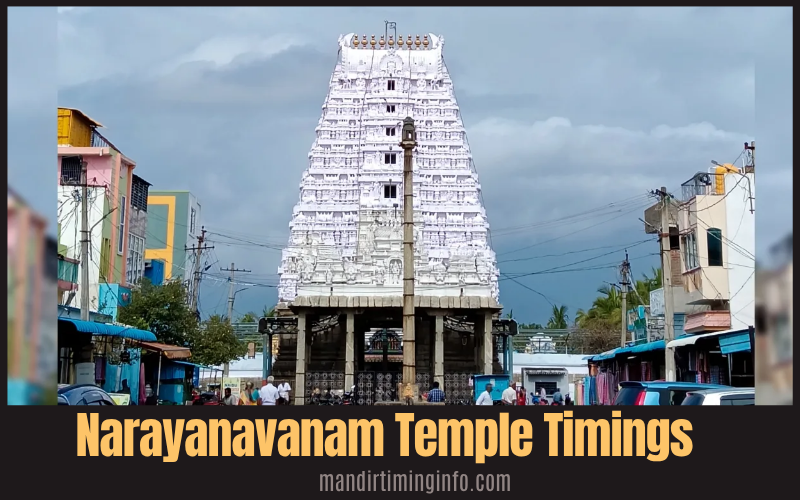
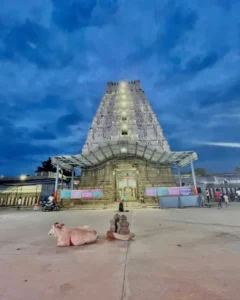
The temple’s skyline is dominated by a towering seven-storeyed Rajagopuram (the ornate entrance tower typical of South Indian temple architecture), paired with an equally impressive mandapam standing in front of it. If you enjoy temple architecture, take a few extra minutes before or after your darshan to walk around the outer complex and appreciate the carving work on the gopuram — it’s easy to rush straight to the sanctum and miss it entirely.
Within the shrine, several large ceremonial vessels are preserved, believed by locals to have been used during the original wedding celebrations. Their size alone hints at how significant this event was considered in local tradition.
Getting to Narayanavanam Tirupati: Location and Travel
If you’re coming from Narayanavanam Tirupati direction, here’s the practical breakdown:
| From | Approximate Distance | Travel Time (By Road) |
|---|---|---|
| Tirupati | 35–45 km | 45–70 minutes |
| Puttur | 2–5 km | 10–15 minutes |
| Chennai | Roughly 100+ km | 2–2.5 hours |
| Nagari | 11 km | 15–20 minutes |
| Bangalore | Roughly 250+ km | 5–6 hours |
The temple sits just off the road connecting Tirupati to the Uthukottai–Chennai highway, and it’s within easy walking distance of the local bus stand. APSRTC buses running toward Puttur, Nagalapuram, and Uthukottai routinely pass through Narayanavanam, so public transport isn’t a problem even if you don’t have your own vehicle.
Getting There: Your Options
- By Road: Government buses connect Tirupati and Narayanavanam directly. Private taxis are widely available for a more comfortable, flexible trip, and self-driving via NH-71 is straightforward with decent road conditions.
- By Rail: The nearest convenient railhead is generally considered to be Tirupati or Puttur (verify current train connectivity before planning, as schedules change).
- By Air: Tirupati Airport is the nearest airport, from which a cab ride gets you to the temple in under an hour and a half.
A Quick Tip for Combining This With a Tirupati Trip
Many pilgrims visiting Tirumala choose to add Narayanavanam as a side trip, since it fits naturally into the larger devotional circuit connecting Tirumala, Tiruchanur (Padmavathi Temple), and this wedding site. If you’re already planning a Tirupati trip, adding a half-day here rounds out the story nicely — you visit where the couple met, where the bride’s temple stands, and where the groom’s hill shrine is, all within a reasonable driving radius.
Best Time to Visit Narayanavanam Temple
Timing your trip well makes a genuine difference to how peaceful your visit feels.
Best Time of Day
Early morning, right around opening time, tends to be the quietest window. You’ll avoid both the heat and the crowds, and you’ll likely get a more relaxed, unhurried darshan experience.
Best Time of Year
Winter months (November to February) bring pleasant weather for the drive and the walk around the temple complex. Summer afternoons in this part of Andhra Pradesh can get quite intense, so if you’re visiting between March and June, plan around the midday heat and stick to early morning or early evening slots.
Monsoon months bring their own charm, with cooler temperatures and green surroundings, though road conditions can occasionally be affected by heavy rain — worth checking before a long drive.
Festival Season: A Double-Edged Sword
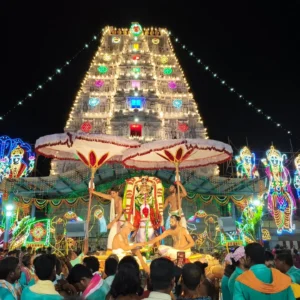
Visiting during Kalyanotsavam (the celebration of the divine wedding) or Brahmotsavam is a beautiful experience — the temple comes alive with rituals, music, and devotees from all over the region. But festival days also mean Narayanavanam Temple Timings can extend, shift, or get restructured entirely to handle the crowd. If your goal is a quiet darshan, avoid these dates. If your goal is to witness the full spectacle, these are exactly the dates to target — just budget extra time for queues and consider arriving well before the gates open.
Seva and Pooja Options: What You Can Book
Beyond the standard free darshan, the temple offers special sevas for devotees who want a more personalized ritual experience. Based on visitor reports, here’s roughly what to expect:
| Seva Type | Approximate Timing | Approximate Cost |
|---|---|---|
| General Darshan | During open darshan hours | Free |
| Kalyanotsavam Seva | Typically late morning to afternoon (around 10 AM–4 PM) | Around ₹500 (verify current rate) |
| Special Pooja Booking | Counter-based on arrival | Varies |
| Kalyana Kankanam (wedding-blessing ritual) | On request at the counter | Varies |
Here’s an important, practical detail: as of the most recent visitor reports we reviewed, there is no confirmed online booking system for these sevas. Tickets are generally purchased directly at the temple counter on the day of your visit, and arriving early — around 8 AM — is commonly recommended to secure your slot. (This should be reconfirmed with the temple office or TTD’s official channels, since booking systems can be introduced or updated over time.)
If you’re specifically visiting for the Kalyana Kankanam ritual (often sought by families looking to bless an upcoming marriage), it’s worth calling ahead, since this seva may require prior coordination with the temple priests.
Dress Code and Temple Etiquette
Unlike some larger temples with strict dress codes, Narayanavanam Temple is relatively relaxed. Decent, respectful clothing is generally sufficient — you don’t need traditional attire specifically, though many devotees choose to wear it out of personal preference and respect for the occasion.
A few simple etiquette pointers that apply to almost any South Indian temple visit:
- Remove footwear before entering the main shrine areas.
- Keep phones on silent inside the sanctum.
- Avoid leather items in certain inner areas, as some temples restrict this — check on arrival.
- Queue patiently during peak hours; darshan can take 20–45 minutes depending on the crowd.
- Avoid loud conversations or photography inside the sanctum sanctorum itself, even if it’s permitted in outer areas.
What to Carry With You
A short, practical checklist for your visit:
- Comfortable footwear you can slip on and off easily
- A small water bottle, especially for summer visits
- Cash for seva tickets, since card payments may not always be available at smaller temple counters
- A cap or umbrella if visiting during peak sun hours, for the wait outside
Accommodation Near Narayanavanam
Since Narayanavanam itself is a small town, lodging options directly in the village are limited. Most visitors choose to base themselves nearby instead:
| Base Location | Distance from Temple | Why Choose It |
|---|---|---|
| Tirupati | ~35–45 km | Widest range of hotels, easy combine with Tirumala trip |
| Puttur | ~2–5 km | Closest option, simpler and quieter stay |
If you’re planning an early morning darshan, staying in Puttur the night before can save you significant travel time compared to driving in from Tirupati.
Related Terms You Should Know Before Visiting
To make your planning easier, here are a few related terms you’ll come across while researching this temple:
- Kalyana Venkateswara Swamy – the specific form of Lord Venkateswara worshipped here, representing him in his role as a bridegroom.
- Suprabhatam – the early morning wake-up ritual performed for the deity.
- Brahmotsavam – the temple’s grand annual festival period.
- Akasaraja – the mythological king believed to be Padmavathi’s father and the host of the divine wedding.
- Giri Pradakshina – a local festival held around Sankranthi involving processions of nearby deities.
Understanding these related terms helps you follow temple announcements, priest instructions, and local conversations far more easily during your visit, and it also helps you make sense of festival calendars if you’re trying to time your trip around a specific event.
Expert Insight: What First-Time Visitors Often Get Wrong
Having pulled together visitor reports, temple listings, and historical records for this piece, a clear pattern emerges: most confusion around Narayanavanam Temple Timings doesn’t come from the temple changing its schedule randomly — it comes from outdated information circulating online. A blog post from a few years ago might list one set of hours, while the temple’s actual current schedule (set by TTD) has since shifted slightly.
The practical takeaway: treat every online timing table, including this one, as a strong starting estimate — then confirm with a quick call to the temple office or the TTD helpline on the morning of your visit. This single habit resolves nearly every timing-related complaint we found in visitor discussions.
Three Common Mistakes to Avoid
- Assuming the midday break doesn’t apply on your visit day. Many visitors show up at 2 PM expecting darshan, only to find the gates shut until 3 PM or later.
- Not carrying cash for seva tickets. Since online booking isn’t consistently available, showing up without cash can mean missing out on a special seva entirely.
- Underestimating festival crowds. Because Narayanavanam is smaller than Tirumala, people assume it never gets crowded — but during Brahmotsavam and Kalyanotsavam, queues can stretch far longer than expected.
Nearby Places to Combine With Your Visit
Since you’re already making the trip out to Narayanavanam, it’s worth combining it with a few nearby spots:
| Nearby Place | Approximate Distance |
|---|---|
| Puttur Subramanya Temple | 10 km |
| Kailasakona Waterfalls | 15 km |
| Nagalapuram | 20 km |
| Sorakayi Swami Samadhi (adjoining the temple lane) | Walking distance |
A day trip that combines the temple with one or two of these stops makes for a well-rounded outing, especially if you’re traveling from Tirupati or Chennai and want to make the most of the journey. The Sorakayi Swami samadhi, in particular, is a peaceful spot right near the temple that many visitors overlook simply because it isn’t the “main” attraction.
Conclusion: Planning Your Visit to Narayanavanam Temple
Here’s the honest summary. Narayanavanam Temple Timings generally follow a 6 AM to 8 PM window, split into a morning darshan slot and an evening darshan slot, with a midday break in between. But because reported timings vary slightly across sources — and shift noticeably during festivals — your smartest move is always to confirm the current schedule directly with the temple before you set out.
Beyond the practical scheduling, Narayanavanam Temple carries genuine historical and spiritual weight as the believed site of Lord Venkateswara and Goddess Padmavathi’s divine wedding, making it far more than just another stop on a Tirupati itinerary. Whether you’re visiting for a quiet weekday darshan or planning around the Kalyanotsavam festival, a little preparation — knowing the timings, carrying cash, checking the weather, and picking the right base for your stay — goes a long way toward a smooth, meaningful trip.
FAQs: Narayanavanam Temple Timings
1. What are the current Narayanavanam Temple Timings?
The temple generally opens around 6:00 AM and closes around 8:00 PM, with darshan split into a morning window (roughly 6:30 AM–1:00 PM) and an evening window (roughly 3:00 PM–8:00 PM). Always confirm on the day of your visit, since these can shift.
2. Does the temple close for a lunch break?
Many visitor reports mention a midday gap, roughly between 1:00 PM and 3:00 PM, though the exact duration isn’t consistent across all sources.
3. Are Narayanavanam Temple Timings different on festival days?
Yes. During Brahmotsavam, Kalyanotsavam, and other major festivals, hours are typically extended or restructured to manage larger crowds.
4. How far is Narayanavanam from Tirupati?
It’s approximately 35–45 km from Tirupati, roughly a 45–70 minute drive depending on traffic and route.
5. Do I need to book seva tickets online in advance?
Based on available visitor reports, there’s no confirmed online booking system, and tickets for special sevas are typically purchased at the temple counter on arrival. Confirm this directly with the temple, as booking systems can change.
Read our previous post:
- Mopidevi Temple Timings
- Siruvapuri Murugan Temple Timings
- Swarnagiri Temple Timings
- Dwarkadhish Temple Mathura Timings
- Boyakonda Gangamma Temple
- Kotappakonda Temple Timings
- Shani Shingnapur Temple Timings
- Arunachalam Temple Darshan Timings
- Bet Dwarka Temple Timings
- Ainavilli Temple Timings
- Karmanghat Hanuman temple timings
- Balkampet Yellamma Temple Timings
- Siddhivinayak Temple Aarti Timings
- Srinivasa Mangapuram Temple Timings
- Meenkulathi Bhagavathi Amman Temple timings
- Jogulamba Temple Timings
- Nageshwar Jyotirling Timing
- Kapaleeshwarar Temple Timings
- Yadadri Temple Timings
- Gudimallam Temple Timings
- Peddamma Thalli Temple Timings
- Tripuranthakam Temple Timings
- ISKCON Temple Abids Timings
- Goravanahalli Mahalakshmi Temple
- Akshardham Gandhinagar Timing
- Sri Karya Siddhi Anjaneya Swamy Temple
- Thirunallar Temple Timings
- Maruthamalai Temple Timings
- Jivdani Mata Mandir
- Calvary Temple Timings
- Madapuram Kali Temple
- Srikurmam Temple Timings
- Kanipakam Vinayaka Temple Timings
- Nimishamba Temple Timings
- Panakala Narasimha Swamy Temple Timings
- Vadakkunnathan Temple Timings
- Ghati Subramanya Temple Timings
- Horanadu Temple Timings
- Penchalakona Temple Timings
- Grishneshwar Jyotirlinga Timing
- Hasanamba Temple timings
- Kondagattu Temple Timings
- Pillayarpatti Temple Timings
- Sigandur Chowdeshwari Temple Timings
Check the latest ticket prices, entry fees, and travel costs easily on Ticket Price Todays
